
Forgotten Roads are more than old paths covered by grass, dust, or time. Across the world, ancient and abandoned roads once connected cities, trading centers, villages, military outposts, and important cultural regions. Some carried merchants and travelers for centuries, while others became silent after wars, changing trade routes, natural disasters, or the construction of modern highways. Today, these Forgotten Roads offer a fascinating way to understand how people moved and lived before modern transportation transformed the world.
Many historic roads have disappeared from everyday maps, but their stories remain surprisingly powerful. A broken stone surface, an abandoned bridge, or a narrow mountain trail can reveal how difficult travel once was. Exploring these can also uncover stories about trade, migration, exploration, conflict, and human survival. For history lovers, they provide a unique connection between the modern world and the civilizations that came before it.
Table of Contents
- Why Forgotten Roads Matter
- Forgotten Roads of the Roman World
- Forgotten Roads of the Silk Road
- Forgotten Roads Across Mountain Passes
- Forgotten Roads of Ancient Trade
- Forgotten Roads Changed by War
- Forgotten Roads Hidden by Nature
- Why Forgotten Roads Still Matter Today
- The Future of Forgotten Roads
Why Forgotten Roads Still Matter
The importance of comes from the stories hidden beneath their surfaces. Roads have always influenced where people lived, where markets developed, and how cultures interacted. Before railways, cars, and airplanes, a road could determine whether an isolated community had access to food, trade, information, or political power.
Some were carefully engineered with impressive construction techniques. Others were simple dirt tracks created gradually by repeated travel. Even when a road was never officially designed, thousands of travelers could turn a natural route into an important transportation corridor.
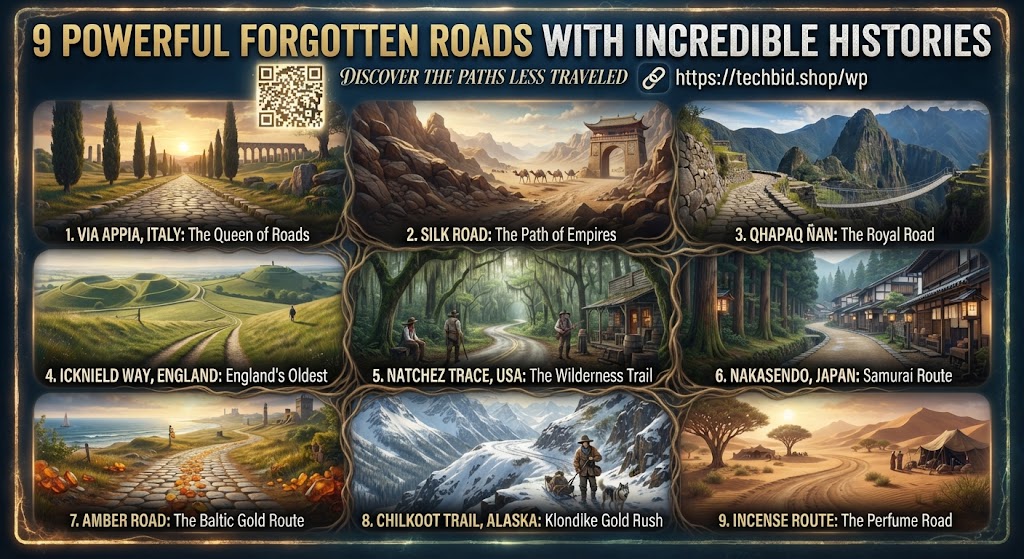
Their disappearance does not necessarily mean they became unimportant. In many cases, modern roads simply replaced older routes because they were faster, wider, or safer. The original paths then slowly disappeared beneath vegetation or modern development.
Forgotten Roads of the Roman World
Roman roads are among the most famous examples of ancient transportation infrastructure. The Roman Empire constructed an enormous network of roads that connected settlements and military territories across Europe, North Africa, and parts of the Middle East.
Some surviving sections remain visible today, while others have become hidden beneath modern landscapes. Roman engineers often used multiple layers of stone and carefully considered drainage, creating roads that could withstand heavy use.
One fascinating feature of Roman roads was their ability to connect distant communities. Soldiers, merchants, government officials, and ordinary travelers could use the same transportation network. This made roads an important part of Roman administration as well as commerce.
Today, remnants of Roman routes can sometimes be found beside modern roads, through fields, or near archaeological sites. These quiet sections provide a physical reminder of how transportation worked almost two thousand years ago.
Forgotten Roads and Ancient Engineering
The engineering behind many remains impressive because builders had to work without modern surveying equipment or heavy machinery. They relied on basic tools, measurements, local materials, and extensive manual labor.
Road builders also had to understand slopes, water drainage, soil conditions, and difficult terrain. In mountainous regions, creating a reliable route could require enormous effort.
Forgotten Roads of the Silk Road
The Silk Road was not one single road but a huge network of routes connecting different parts of Asia, the Middle East, and Europe. Merchants transported silk, spices, precious metals, textiles, ideas, technologies, and cultural traditions along these routes.
Many sections of the network are now , especially where deserts expanded, settlements declined, or modern transportation systems replaced traditional routes.
Travel across these routes could be extremely dangerous. Merchants had to deal with deserts, mountains, extreme temperatures, limited water, and bandit attacks. Yet the economic value of long-distance trade encouraged people to continue using them.
The historical importance of these Forgotten Roads extends beyond commerce. Languages, religions, artistic styles, scientific knowledge, and technologies also moved between regions through human travel.
Forgotten Roads Across Mountain Passes
Mountains have always created some of the world’s most challenging transportation routes. Yet people developed narrow trails and roads across mountain passes to connect otherwise isolated communities.
These Forgotten Roads could be dangerous because of steep slopes, snow, rockfalls, and changing weather. Travelers often had to depend on local knowledge to safely navigate difficult sections.
Some mountain routes were used by traders, pilgrims, armies, and migrating communities. Over time, many became less important when tunnels, bridges, railways, and modern highways offered easier alternatives.
The remains of these can still reveal how earlier societies adapted to difficult landscapes. A narrow trail carved into a mountainside may represent generations of travel and economic activity.
Forgotten Roads and Mountain Communities
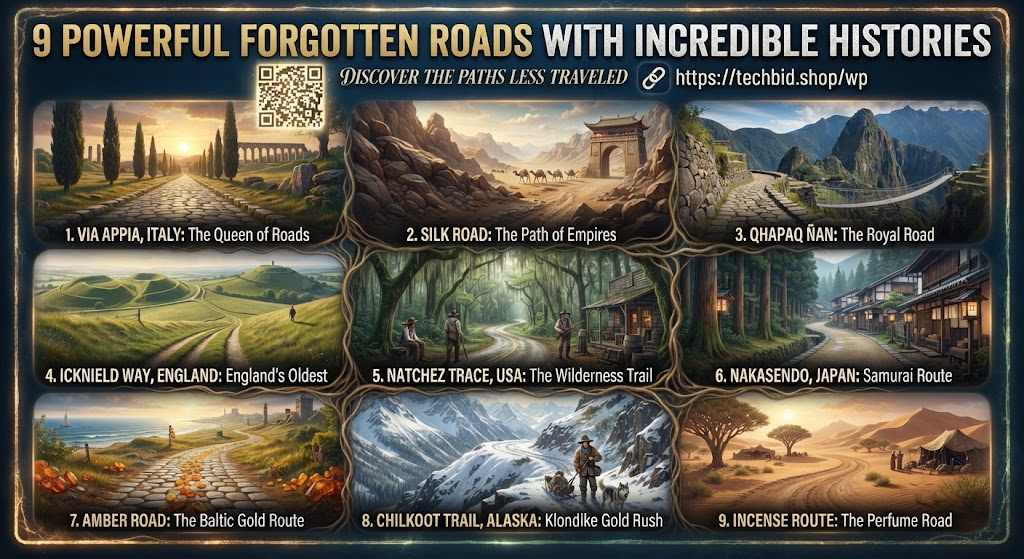
For mountain communities, were often lifelines rather than simple transportation routes. A road could provide access to markets, medical assistance, education, and neighboring settlements.
When a modern road replaced an older path, the original route might quickly lose its economic role. However, its historical importance can remain significant.
Forgotten Roads of Ancient Trade
Long before global shipping networks existed, traders depended heavily on overland routes. Ancient trade roads connected agricultural regions with cities and ports.
Some Forgotten Roads developed around natural geography. Rivers, valleys, mountain passes, and oases could determine the safest or most practical route.
Trade routes also encouraged the growth of settlements. Travelers needed places to rest, find water, exchange goods, and protect animals. As a result, small communities could grow into important commercial centers.
When political borders changed or trade patterns shifted, some of these roads gradually lost their importance. The result was a landscape filled with abandoned paths and archaeological remains.
Forgotten Roads Changed by War
Wars have repeatedly transformed transportation networks. Roads used by armies could become strategically important, while conflicts could also destroy bridges, settlements, and transportation infrastructure.
Some Forgotten Roads became abandoned after military campaigns changed regional power structures. Others were replaced because communities moved or borders changed.
Military history is therefore closely connected with old transportation routes. A road that appears ordinary today may once have been used by soldiers, refugees, merchants, or messengers.
Studying these Forgotten Roads can help historians understand how people moved during periods of conflict. The physical landscape can sometimes provide evidence that written records do not fully explain.
Forgotten Roads Hidden by Nature
Nature is one of the strongest forces behind the disappearance of Forgotten Roads. Once regular maintenance stops, vegetation can quickly cover old surfaces. Rain can erode pathways, rivers can change course, and landslides can destroy sections of mountain roads.
In forests, an abandoned road may eventually look like a natural trail. In deserts, wind can cover ancient paths with sand. In wetter regions, moss and vegetation can hide stonework almost completely.
This makes some Forgotten Roads difficult to discover without archaeological research, historical maps, aerial photography, or local knowledge.
Forgotten Roads Beneath Modern Landscapes
Modern development has also hidden many Forgotten Roads. Cities expand, farms change shape, and new highways are built over older transportation corridors.
In some locations, fragments of old roads survive beneath modern streets. Archaeological excavations can sometimes reveal these earlier layers of transportation history.
This creates an interesting connection between old and new infrastructure. A modern city may unknowingly continue following a route established hundreds or thousands of years ago.
Forgotten Roads: A Historical Comparison
The following table shows how different types of Forgotten Roads were commonly used and why they eventually declined.
| Type of Forgotten Road | Main Historical Use | Common Reason for Decline |
|---|---|---|
| Ancient Roman routes | Military and trade travel | Political change and modern roads |
| Silk Road routes | Long-distance commerce | Changing trade networks |
| Mountain passes | Regional travel and trade | Tunnels and safer highways |
| Desert routes | Caravan transportation | Modern transport systems |
| Military roads | Army movement | Conflicts and strategic changes |
| Village paths | Local travel | Urban expansion and modern roads |
Forgotten Roads and Their Historical Timeline
This simple timeline illustrates how transportation routes can move from active use to historical importance. The figures are conceptual rather than measurements of specific roads.
Active Use → Regional Importance → Decline → Abandonment → Historical Discovery
██████████ Active transportation
████████ Regional trade
██████ Reduced use
████ Abandoned route
██ Archaeological or historical interest
The pattern is common across many Forgotten Roads. A route may remain essential for generations before changing technology, economics, politics, or geography makes it unnecessary.
Why Forgotten Roads Still Matter Today
The study of Forgotten Roads can teach us important lessons about changing societies. Transportation systems are never completely permanent. Routes that appear essential today may eventually be replaced by new technologies and infrastructure.
Old roads can also support cultural tourism and historical research. Carefully preserved routes may help visitors understand how earlier communities traveled through difficult environments.
Another important value is environmental history. An abandoned road can show how landscapes changed after human activity decreased. Researchers can sometimes study vegetation growth, erosion, settlement patterns, and changes in water systems around old transportation routes.
For local communities, Forgotten Roads may also become part of cultural identity. Stories about travelers, traders, migrations, and historical events can remain connected to particular paths for generations.
Protecting Forgotten Roads for the Future
Preserving Forgotten Roads requires more than simply placing a sign beside an old path. Historical documentation, archaeological research, environmental protection, and responsible tourism can all contribute to preservation.
Digital mapping can also help researchers document locations that are difficult to reach. Old maps can be compared with satellite imagery and modern geographic data to identify possible historical routes.
The challenge is finding a balance between public access and protection. Too much tourism can damage fragile archaeological remains, while complete neglect can allow nature or construction to erase them.
Conclusion: Forgotten Roads With Stories Worth Remembering
Forgotten Roads are silent pieces of history that reveal how earlier generations connected communities and survived difficult journeys. From ancient trade corridors and Roman routes to mountain trails and abandoned military paths, these roads demonstrate that transportation has always shaped human civilization.
Although many Forgotten Roads are no longer used, they still have historical value. Their remains can help us understand trade, migration, engineering, conflict, culture, and environmental change.
The next time you see an old trail disappearing into a forest or a worn path crossing an empty landscape, it may be more than an ordinary road. It could be a small surviving piece of a much larger story.
Final Thought on Forgotten Roads
The history of Forgotten Roads reminds us that progress does not completely erase the past. Sometimes, the quietest paths contain some of the most fascinating stories.

Leave a Reply