
- Introduction to Forgotten Traditions
- Why Forgotten Traditions Still Matter
- Forgotten Traditions and Cultural Identity
- Forgotten Traditions in Family Life
- Forgotten Traditions Connected With Nature
- Forgotten Traditions Around Food and Community
- Forgotten Traditions and Traditional Crafts
- Forgotten Traditions in Modern Celebrations
- Forgotten Traditions and Their Modern Survival
- How Forgotten Traditions Can Inspire the Future
- Forgotten Traditions in a Changing World
- Why Preserving Forgotten Traditions Matters
- Conclusion
Introduction to Forgotten Traditions
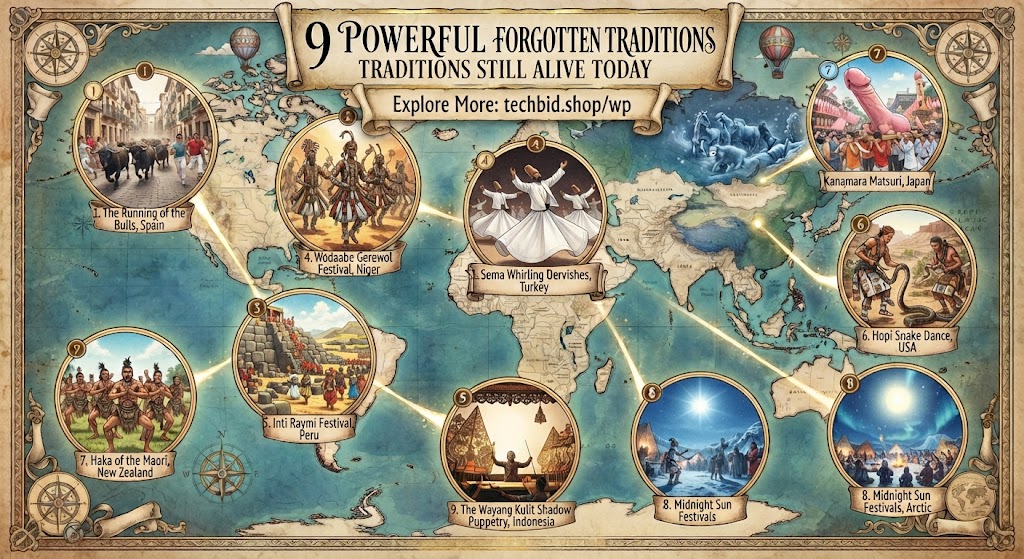
Forgotten Traditions are cultural practices, customs, skills, celebrations, and everyday habits that may have become less common but have not completely disappeared. In many communities, these traditions continue quietly through families, villages, craftspeople, festivals, food, storytelling, and local celebrations. Although modern lifestyles have changed the way people communicate and live, many still survive because communities continue to recognize their cultural and emotional value Forgotten Traditions .
Some traditions are hundreds or even thousands of years old, while others became less popular only a few generations ago. Their survival shows that modernization does not always completely replace older ways of life. Instead, traditional practices can adapt to modern surroundings and continue in a different form Forgotten Traditions .
Why Forgotten Traditions Still Matter
The importance of goes beyond history. Traditions can provide communities with a connection to their past while helping younger generations understand where certain customs, stories, foods, and artistic practices originated. When an old tradition disappears, a small part of a community’s cultural memory may disappear with it.
At the same time, traditions should not be treated as something that must remain unchanged forever. Communities naturally adapt their customs to new circumstances. A traditional celebration may use modern music, an old craft may be sold through online platforms, and a traditional recipe may be prepared with ingredients that are easier to find today.
This ability to adapt can help Forgotten Traditions remain relevant rather than becoming museum pieces that people only read about in history books Forgotten Traditions.
Forgotten Traditions and Cultural Identity
One of the strongest reasons continue to exist is cultural identity. People often feel connected to customs that were practiced by their parents, grandparents, and earlier generations. Even a simple family ritual can carry memories that cannot easily be replaced by modern entertainment.
Traditional songs, regional clothing, storytelling, ceremonies, and handmade objects can all represent a community’s unique identity. When people continue these practices, they create a living connection between different generations.
Forgotten Traditions Passed Through Generations
The passing of knowledge from older people to younger family members is especially important for An elderly craftsperson, for example, may know techniques that are not written in books. A grandparent may remember an old recipe or a traditional story that exists only through oral history.
These forms of knowledge can survive when younger people show interest in learning them. Modern technology can also support this process by allowing families and communities to record stories, photograph crafts, and document traditional practices.
Forgotten Traditions in Family Life
Many Forgotten Traditions survive because families continue practicing them privately. These traditions may not receive international attention, but they can remain meaningful within individual households.
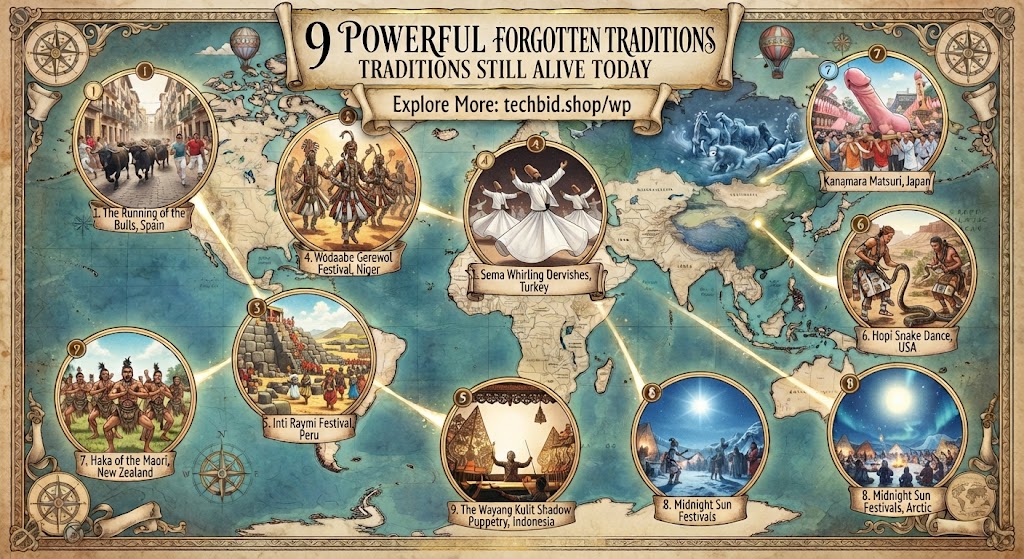
Family gatherings around traditional meals, seasonal preparations, storytelling evenings, handmade decorations, and customary greetings are examples of practices that can continue even when the wider society becomes more modern.
Forgotten Traditions and Family Memories
A tradition often becomes valuable because of the memories connected with it. A particular meal may remind someone of childhood, while a yearly family gathering can create a sense of continuity.
This emotional connection helps explain why some remain alive even when younger generations have many new forms of entertainment and communication available to them.
Forgotten Traditions Connected With Nature
Before modern technology became part of everyday life, many communities developed around seasonal changes, agriculture, weather, plants, animals, and natural resources. Some of these practices have become less common, but traces remain in many rural and cultural communities.
Seasonal festivals, planting customs, traditional weather observations, and nature-based celebrations can reflect how earlier generations understood their environment.
Forgotten Traditions and Seasonal Knowledge
Traditional knowledge about seasons can sometimes contain practical observations developed through long-term experience. Farmers and local communities historically paid close attention to rainfall, temperature, animal behavior, soil conditions, and seasonal patterns.
Modern science provides more advanced tools for understanding environmental systems, but traditional ecological knowledge can still offer valuable cultural and historical perspectives when carefully documented and understood in context.
Forgotten Traditions Around Food and Community
Food is one of the easiest ways for to survive. Traditional recipes are often passed from one generation to another through family kitchens rather than formal institutions.
A recipe can preserve information about local agriculture, available ingredients, cultural celebrations, and historical influences. Traditional cooking methods may also reveal how earlier communities used limited resources creatively.
Forgotten Traditions Through Traditional Recipes
Many old recipes survive because families continue preparing them during weddings, festivals, holidays, or important family gatherings. Even when ingredients or cooking equipment change, the basic identity of the dish can remain recognizable.
Social media has also created new opportunities for traditional food knowledge. A recipe that was once known only within one household can now be documented and shared with thousands of people.
Forgotten Traditions and Traditional Crafts
Traditional crafts represent another important area where remain visible. Hand weaving, pottery, embroidery, wood carving, basket making, metalwork, and other crafts have historically provided both practical objects and artistic expression.
Industrial manufacturing has reduced the everyday need for some handmade products, but traditional crafts continue through specialist artisans, cultural markets, workshops, museums, and local communities.
Forgotten Traditions in Handmade Skills
Handmade skills can take years to master. When an experienced craftsperson teaches these techniques to younger people, knowledge that might otherwise disappear can continue.
Modern consumers have also shown interest in handmade and culturally distinctive products. This can create new economic opportunities for artisans while helping preserve traditional techniques.
Forgotten Traditions in Modern Celebrations
Many Forgotten Traditions remain alive through modern festivals and celebrations. People may use contemporary clothing, smartphones, transportation, and modern entertainment while still following customs that originated generations ago.
This combination demonstrates how traditions can change without completely disappearing. The central meaning of a celebration may remain while its appearance evolves.
Forgotten Traditions With a Modern Touch
A traditional celebration might now include digital invitations, online photographs, modern decorations, or social media posts. These changes do not necessarily remove the traditional element.
Instead, they can help younger generations participate in that might otherwise feel distant from modern life.
A Look at Forgotten Traditions Across Different Areas
The survival of can be understood through several cultural areas. The following table is an illustrative framework showing different ways traditional practices can continue today.
| Cultural Area | Examples of Forgotten Traditions | How They Survive Today |
|---|---|---|
| Family | Stories, recipes, rituals | Family gatherings |
| Food | Traditional cooking methods | Festivals and home cooking |
| Crafts | Weaving, pottery, carving | Artisans and workshops |
| Nature | Seasonal customs | Community events |
| Celebrations | Local ceremonies | Festivals and cultural events |
| Storytelling | Folktales and oral history | Schools, families and media |
The table shows that Forgotten Traditions are not limited to one particular part of society. They can exist in ordinary family activities, artistic skills, food, celebrations, and relationships with the natural environment.
Forgotten Traditions and Their Modern Survival
The survival of can take different forms in the modern world. Some remain inside families, while others continue through festivals, cultural organizations, traditional businesses, museums, schools, and online communities.
Technology has created new ways to document and share traditional practices. A local craft can be photographed and introduced to a wider audience, while an old recipe can be recorded and preserved digitally.
These modern tools can help Forgotten Traditions reach younger generations without requiring communities to abandon their original cultural meaning.
How Forgotten Traditions Can Inspire the Future
The future of does not necessarily depend on returning completely to the past. Instead, traditional knowledge can sometimes inspire modern ideas.
Traditional crafts can influence contemporary design. Old food preservation methods can inspire discussions about reducing waste. Community celebrations can encourage stronger social connections. Traditional storytelling can provide material for books, films, education, and digital media.
The key is understanding the original meaning of a tradition while allowing communities to decide how they want to preserve or adapt it.
Forgotten Traditions and Younger Generations
Young people have an important role in keeping alive. Schools, families, cultural organizations, museums, local communities, and digital creators can all contribute to documenting traditional knowledge.
Technology can make this process easier. A traditional song can be recorded, an artisan can demonstrate a craft through video, and an old family recipe can be digitally preserved. These simple actions can help prevent valuable cultural information from being forgotten.
Forgotten Traditions in a Changing World
Globalization and rapid modernization have changed how people communicate, work, travel, and consume entertainment. As lifestyles become increasingly connected, some local customs may become less visible.
However, this does not mean that every traditional practice will disappear. Some may become popular again because people are interested in cultural authenticity, handmade products, local food, historical knowledge, and meaningful community experiences.
A tradition can therefore move through different stages. It may become common, decline in popularity, survive within a small group, and later experience renewed interest.
Why Preserving Forgotten Traditions Matters
Preserving Forgotten Traditions can help maintain cultural diversity. Every community has stories, skills, customs, and practices that contribute to the wider human record.
Preservation does not have to mean freezing traditions exactly as they were hundreds of years ago. Responsible preservation can include documentation, education, community participation, and allowing people connected to the tradition to decide how it should continue.
This approach gives space to evolve while keeping their historical roots visible.
Conclusion
show that the past can remain present even in a rapidly changing world. From family recipes and storytelling to traditional crafts, seasonal customs, celebrations, and community practices, many old traditions continue in ways that are sometimes easy to overlook.
Their survival demonstrates that modernization and tradition do not always have to exist as opposites. Old practices can adapt to new lifestyles while still carrying cultural meaning. Families can pass knowledge to younger generations, artisans can use modern markets, and digital platforms can document traditions that were once shared only within small communities.
The future of will depend largely on whether communities continue to value, document, teach, and adapt them. When traditional knowledge is given room to evolve, the past can remain a meaningful part of the future.

Leave a Reply